
Get Healthy!
- Posted January 29, 2026
Nearly Half Of American Adults Will Be Obese By 2035, Study Warns
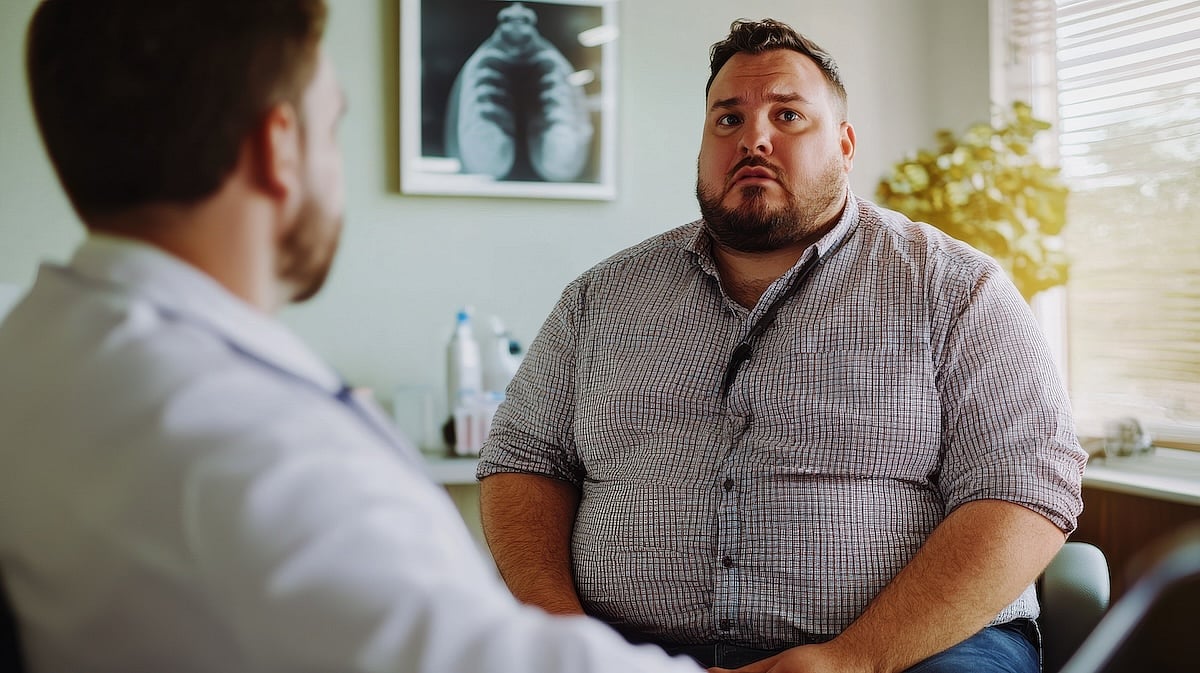
Nearly half of American adults – some 126 million people – will be obese within 10 years, a new study projects.
Adult obesity in the U.S. is projected to affect 47% of the population by 2035, researchers reported Jan. 28 in the Journal of the American Medical Association.
And that’s after obesity rates already doubled among U.S. adults during the past three decades, rising from 19% in 1990 to more than 42% in 2022, researchers said.
“While there are large differences by race and ethnicity, sex, age and state, the prevalence of obesity is high and forecasted to continue increasing for all groups,” wrote the research team led by Catherine Johnson, a lead research scientist at the University of Washington Institute for Health Metrics and Evaluation in Seattle.
Black folks and Hispanic people – especially women – are expected to have the highest burdens of obesity, researchers project.
If these projections come to pass, the United States could face a dramatic increase in chronic diseases related to obesity, warns Dr. Armando Castro-Tie, chair of surgery at South Shore University Hospital with Northwell Health in Bay Shore, New York.
"Look at the rates of heart disease, diabetes, pulmonary disease and certain types of cancers. All of those are correlated with higher" body mass index (BMI), said Castro-Tie, who reviewed the findings.
BMI is an estimate of body fat based on height and weight.
“And so, if we don't curb it, especially in the childhood and adolescent age groups, then we're just going to be dealing with an overall more morbid population. Are our health care system and infrastructure equipped to handle that? Arguably, probably not.” Castro-Tie said.
For the new study, researchers analyzed BMI data on Americans gathered from three longstanding health surveys, representing more than 11 million people polled between 1990 and 2022.
They then used that data to project obesity trends through 2035.
In 2022, the highest levels of obesity were seen among Black women (57%) and Hispanic women (49%).
Among men, the highest levels were also found in those groups, with obesity affecting 40% of Black men and 43% of Hispanic men.
Young women are seeing some of the steepest increases in obesity, researchers said. Hispanic and white women between 30 and 34 years of age experienced the largest increase in obesity, while Black women between 25 and 29 had a steep rise, doubling from 26% to 53%.
“The results indicate substantial increases in the prevalence of obesity among younger ages over the past several decades, representing earlier onset of obesity,” researchers wrote. “They also show lower prevalence of obesity at the oldest ages, likely representing premature mortality for those living with obesity or the effects of multimorbidity in older persons.”
Differences between states also are wide and growing wider, researchers said.
Overall, obesity rates are highest in Midwestern and Southern states, the study found.
In 2022, Oklahoma had the highest levels of female obesity (54%) and Indiana the highest levels of male obesity (47%).
By 2035, obesity is expected to be highest for women in South Dakota (60%) and highest for men in Indiana (54%), the study said.
“These forecasts indicate that geographic patterns are changing,” researchers wrote. “Predictions in states with historically high levels of obesity, such as Mississippi, suggest that the prevalence of obesity may be plateauing in some locations. In contrast, marked increases are predicted for other locations, such as Oklahoma.”
These differences also indicate what might be driving obesity in certain places, researchers noted.
“For example, Colorado, which had a low estimated prevalence of obesity, also had the lowest reported prevalence of physical inactivity,” researchers wrote. “States with consistently high prevalence of obesity, such as Oklahoma, had among the lowest percentage of people meeting dietary intake recommendations.”
Castro-Tie said he found the study results “not at all surprising.”
“You know, we've been sounding the alarm about the obesity rise among children and adolescents for decades. And so, I think this is now bearing fruit. This isn't hyperbole; this is real,” he said.
He predicted that health will continue to decline unless medical professionals and society alike take the issue to heart.
“Increased health care costs and increased health care burden are very real,” Castro-Tie said.
More information
The U.S. Centers for Disease Control and Prevention has more on adult obesity.
SOURCES: University of Washington, news release, Jan 28, 2026; Dr. Armando Castro-Tie, chair of surgery at Northwell Health South Shore University Hospital; Journal of the American Medical Association, Jan. 28, 2026
